

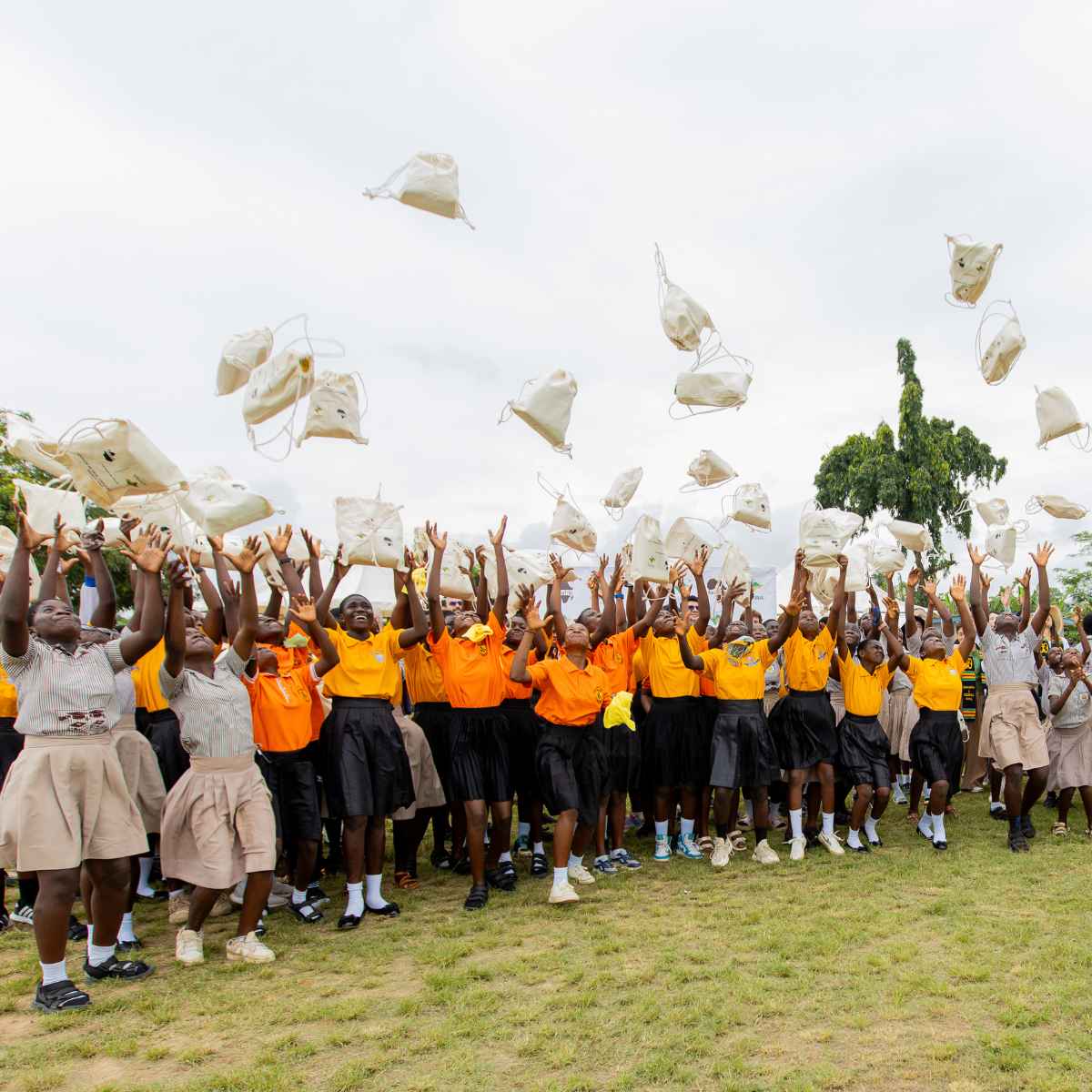
For many girls, menstruation is a normal part of growing up. But without access to the right information, sanitary products and safe facilities, something natural can become a barrier to education.
In Amanase, a farming community near Suhum in Ghana’s Eastern Region, this was a reality for girls at Nana Apeatu D/A JHS and Amanase Asare Panyin D/A JHS. Without adequate washroom facilities, some girls had to leave school during their periods or stay home altogether because they did not have a safe and private place to manage their menstruation.
At fairafric, we believe that creating lasting impact in the communities around us means paying attention to these everyday challenges. That is why we partnered with the CEIBS GEMBA 2025 cohort on the Menstrual Dignity Project, an initiative designed to support menstrual health, dignity and better learning conditions for girls in Amanase.

More than menstrual hygiene
The project was built around three connected interventions: menstrual health education, the distribution of menstrual hygiene kits, and improved sanitation infrastructure.
More than 250 girls from the two schools received menstrual hygiene kits containing reusable and disposable sanitary pads, providing more than three months of menstrual products. Each kit also included an educational brochure on menstruation, a face towel, and a backpack.
But providing products was only part of the solution.
The project also created space for open conversations about menstruation. Students participated in an educational session covering menstrual hygiene, understanding the changes that come with menstruation and building confidence. The session also addressed some of the myths and stigma surrounding periods, while encouraging boys and girls to understand menstrual health better and support one another.
Building safer spaces at school

Alongside education and practical support, the project addressed one of the most immediate challenges facing the two schools: inadequate sanitation facilities.
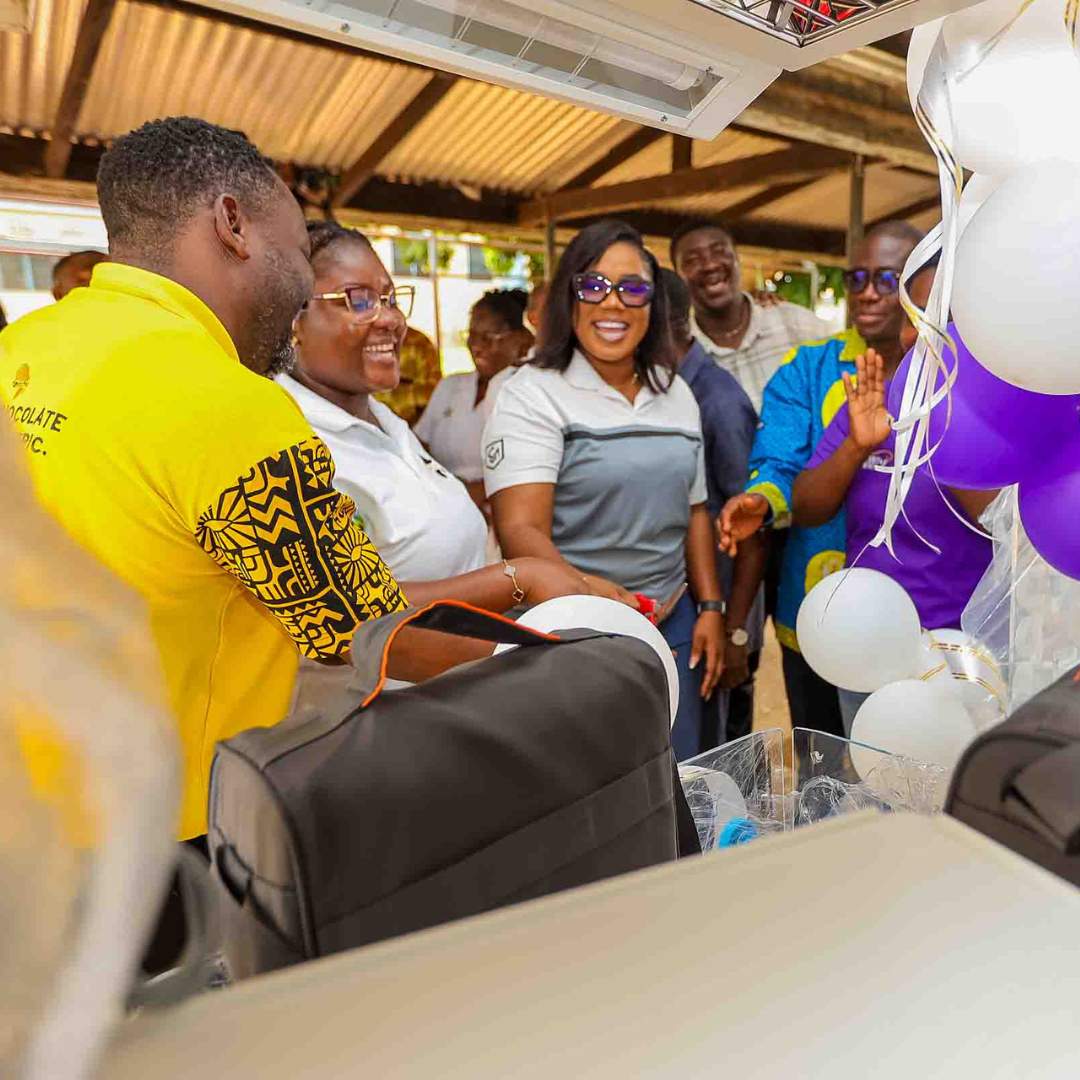
Two new washroom facilities were constructed and officially handed over on 17 June 2026.
The facilities include:
- A six-unit washroom block at Amanase Asare Panyin D/A JHS
- A three-unit washroom block at Nana Appaitu D/A JHS
For the students, these are more than new buildings. They provide privacy and a safer environment for managing menstruation while at school.
By bringing together education, menstrual hygiene products and appropriate sanitation facilities, the project takes a more holistic approach to menstrual health — helping to address both the practical challenges and the stigma that can surround menstruation.
A partnership for lasting community impact
The Menstrual Dignity Project was made possible through the partnership between fairafric and the CEIBS GEMBA 2025 cohort, whose ESG initiative focused on translating resources and knowledge into tangible community impact.
The project also brought together school authorities, education officials, traditional leaders, parents and community members — reflecting an important part of our approach to community development: meaningful change is stronger when the community is involved.

Creating opportunities to stay in school
For us, the Menstrual Dignity Project is part of a broader commitment to the communities around our factory in Amanase.
Education does not happen in isolation. The environment in which children learn — including access to safe sanitation, health information and basic dignity — can shape their ability to participate fully in school.
We are grateful to the CEIBS GEMBA 2025 cohort, the school communities, education officials, traditional leaders, parents and everyone who contributed to making the project possible.
Together, we can help create communities where girls can learn, participate and grow with confidence and dignity.

Leave a comment
This site is protected by hCaptcha and the hCaptcha Privacy Policy and Terms of Service apply.